

🇺🇸

Last update
April 2026
By
Laura Ramirez
Business developer
Slimstock is a software specialized in supply chain planning and optimization. Its solution is focused on forecasting, inventory management and automatic replenishment. Its Slim4 platform calculates demand forecasts, optimal stock parameters and generates recommended orders by SKU and location, integrating with ERP systems and other transactional applications.
Datup It is a system of Supply Chain Analytics with AIinventory optimization with intelligent suggestions evaluating business rules, intelligent distribution of inventory between stores and warehouses in multiple locations, and a conversational assistant with AI trained for the supply chain. It has alta precisión, optimización de inventarios con sugerencias inteligentes evaluando reglas de negocio, distribución inteligente del inventario entre tiendas y bodegas en múltiples ubicaciones, y un asistente conversacional con IA entrenado para cadena de suministro. Cuenta con agile deployment (<8 weeks), which significantly increases hiring ROI in the short term. which enhances demand and inventory management for large companies. It has demand projections for
Do you already know which one is best for your operation?
Schedule a personalized demo and receive a free diagnosis of your chain of supply.
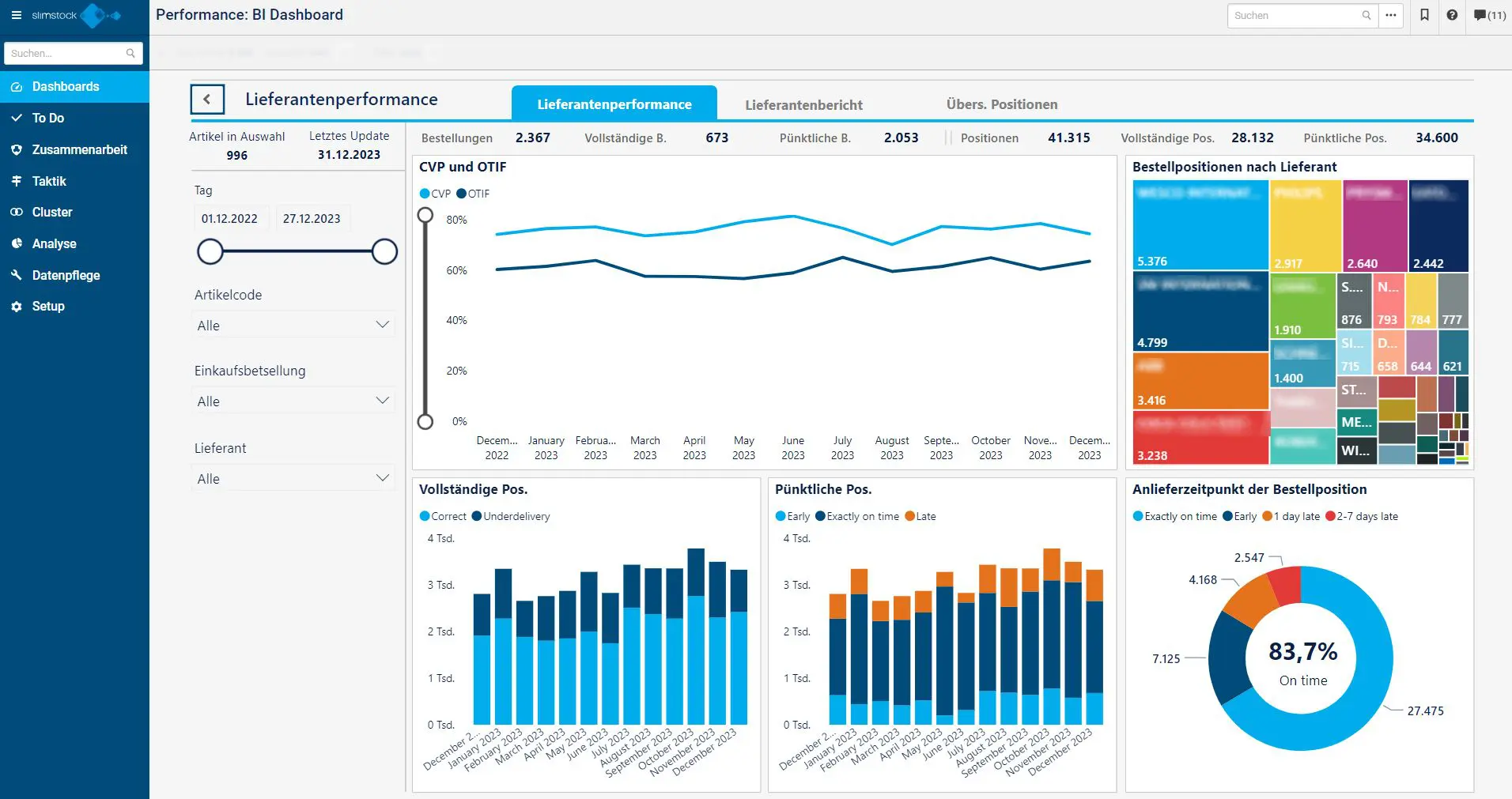
Slimstock You have demand forecasting capabilities based on machine learning. It offers forecasts with multiple horizons, segmentation, detection of seasonalities and trends. It also offers real-time alerts to identify problems in time with a user-friendly interface.
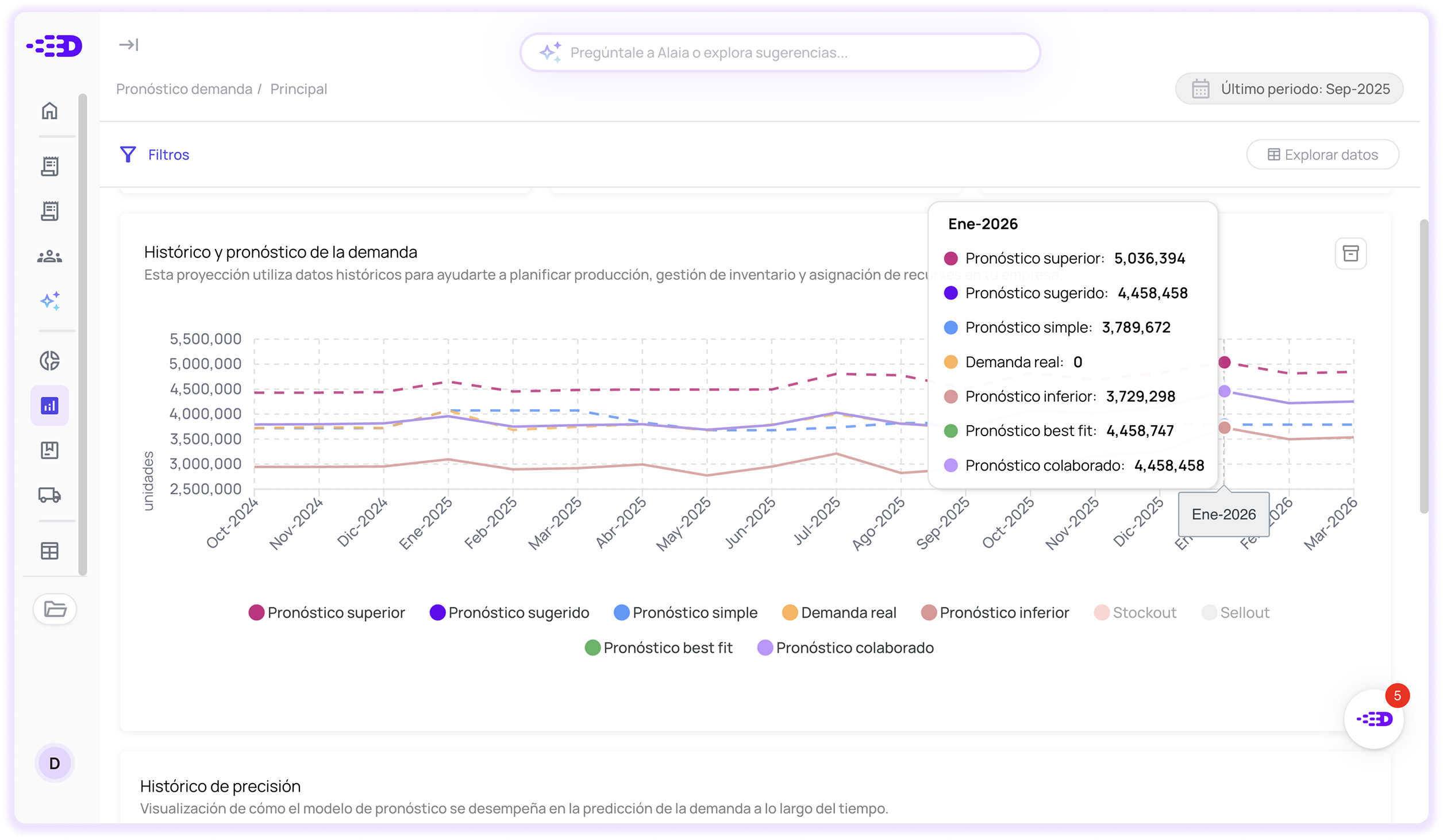
For its part, Datup It has the module specialized in demand management which develops various prediction scenarios powered by AI and Machine Learning models, with up to 95% accuracy, taking into account more than 200 external variables, integrating with various sources of ERP, WMS, CRM, TMS or whatever your company requires.
Slim4 helps you to manage and optimize your inventory in an intelligent way. The system automates your stock policies and dynamically calculates key parameters such as safety stock, order points and maximum levels for each location, adjusting to demand volatility, your forecasts, service levels and the conditions of your suppliers. You can optimize your entire warehouse network with multi-echelon capabilities, intelligently assign inventory to your stores or sales channels, and balance stock between warehouses and points of sale.
With Datup, you have an Intelligent Inventory Management System which instantly controls any lack or accumulation of inventory, delivering proposals based on sales projections to avoid problems.
The platform establishes when and how much to buy, taking into account the delivery times of the suppliers and the policies of your company. If you manage several points of sale or warehouses, indicate the most efficient allocation of stock to reduce storage costs and boost cash flow.
On the other hand, it continuously determines the level of Safety Stock optimal for each item and allows you to define strategies adjusted according to profitability, speed of delivery and the importance of the product.
Slimstock simplify your purchases and provisioning automatically. The system creates purchase orders taking into account the minimums and multiples of each supplier, the optimal filling of containers and your demand forecasts. This way you centralize planning without losing control over the logistical and commercial conditions of each operation.
It also includes advanced order and supplier management that allows you to Prioritize the most critical assortment, adjust your plans when there are capacity restrictions or changes in delivery times, and ensure that your purchases are aligned with your customer service strategy and the profitability of each channel.
Datup has AI-driven sourcing capabilities. In addition, you can plan the supply collaboratively with key teams, but it also provides intelligent suggestions to determine where and when to replenish with the Inventory distribution optimization module, based on accurate forecasts created with Machine Learning and AI.
Slimstock facilitate your processes of S&OP and IBP by centralizing all key information in one place. It connects demand, supply, inventory and business operations data so that all teams work with the same information and on the same scenarios.
You can build unified decision processes, such as complete S&OP cycles with views by product, customer, and channel. The system includes automated workflows that guide you in the preparation, review and approval of plans, integrating forecasts, capabilities and restrictions in a collaborative environment where everyone participates.
On the other hand, Datup with its different modules (Portfolio Classification, Demand Planning, Inventory Management And Optimized distribution) it centralizes end-to-end supply chain decisions, integrating planning with inventories, operations, sales and finance. Unlock retained capital and improve service levels with intelligent suggestions based on your real-time operation.
Companies that have already optimized their supply chain with Datup





“AlAia allowed us to detail analysis of causes and corrections. The Datup team is always looking for ways to solve with support, willingness and prompt response.”

Edwin Roa Rojas
Head of Sourcing, Crepes & Waffles, Colombia
“
We identify the most efficient type of integration for your operation (API, Data Warehouse or files) and connect directly to your system or other key sources.
We extract data from your system, structure it according to your operation, and train our AI models to deliver accurate and actionable recommendations.
We provide you with ready-to-use dashboards, with clear and actionable information. We validate with your team that the recommendations fit the operational reality and fine-tune the last details.
Schedule this week and receive a diagnosis gratuitous
We analyze your operation and show you the potential for improvement. Sin commitment.
Price is one of the main criteria in the decision. Below is a general reference.
Datup
Up to 10x more reachable
Fixed monthly subscription, scalable according to your needs.
✓ Unlimited users included
✓ No big initial investment
✓ Implementation included (4-8 weeks)
✓ Personalized support and training
✓ ROI in 3-6 monthsSubscript
Slimstock
High-value investment
Licenses + implementation + integration + maintenance.

