---
Home
Comparisons
Datup vs Tools Group

Tools Group: what it is, features and opinions 2026

If you want to manage your supply chain with Tools Group, check out this guide and make the best decision. Get to know all the information about the features, reviews and prices you can get with this tool.
o9 Solutions Features

Comparison table between Tools Group and Datup

Feature Datup Modern AI ToolsGroup
Main Focus Operational and tactical supply chain optimization using AI with integrated modules for planning, inventory, purchasing, and distribution. Integrated AI assistant that responds via the platform and WhatsApp. Supply chain planning based on probabilistic models, multi-echelon inventory optimization (MEIO), and digital twin.
Implementation Time Less than 8 weeks FAST
Agile and flexible configuration, ideal for companies needing immediate results.
Several months
Depends largely on implementation complexity and model configuration.
Required Investment Competitive and scalable pricing model. ROI in months, not years. Variable and medium-term ROI, depending on business adaptation and advanced consulting required.
Core Technology Artificial intelligence, advanced analytics, external variables. Probabilistic models, simulations, scenario analysis, and Machine Learning.
Learning Curve Agile, operational use. Steeper learning curve due to the complexity of probabilistic models and multi-echelon optimization.
Integration With ERPs, WMS, TMS, and +200 external variables. Possibility of integration with complex enterprise systems and ERPs.
Implementation Area Supply chain, logistics, operations. Demand and supply planning, multi-echelon inventory optimization (MEIO).
Ideal Company Profile Mid-sized and large companies needing agile and tactical supply chain results, focused on automation, AI, and rapid adoption. Large companies in manufacturing, retail, and global distribution sectors requiring robust probabilistic models.

Key features of Tools Group

Inventory optimization

Tools Group it has several functionalities for the optimization and management of inventories:

  • Calculate the optimal inventory mix throughout the supply network, considering different levels and locations.
  • It classifies products by ABC volume and “service classes” that define sales and marketing according to the strategic value of each product. Each SKU is adjusted to meet your specific service goal, achieving the overall objective with the least amount of inventory.
  • Multilevel optimization (MEIO) balances inventory: from raw materials to distribution centers. Calculate the safety stock optimal in multiple steps, locations and bill of materials levels.

For its part, Datup It offers for the inventory optimization:

  • Smart Suggested Reorder by SKU and SKU-Location: Know exactly what you should order and where you should have it. Based on advanced forecasts, business rules and lead times, Datup automatically detects where you should have inventory and avoid stock failures.
  • Portfolio classification for profitability, speed of rotation and stability of your demand.
  • Optimization by distribution: Product transfers are estimated according to excesses and shortages of inventory at points of sale, suggesting the different transfers that must be made between locations to ensure availability.

Demand planning and forecasting

Tool that uses advanced algorithms to forecast future demand, adapting to historical patterns and new trends. This allows companies to anticipate needs and reduce the risk of shortages.

Sales & Operations Planning (S&OP)

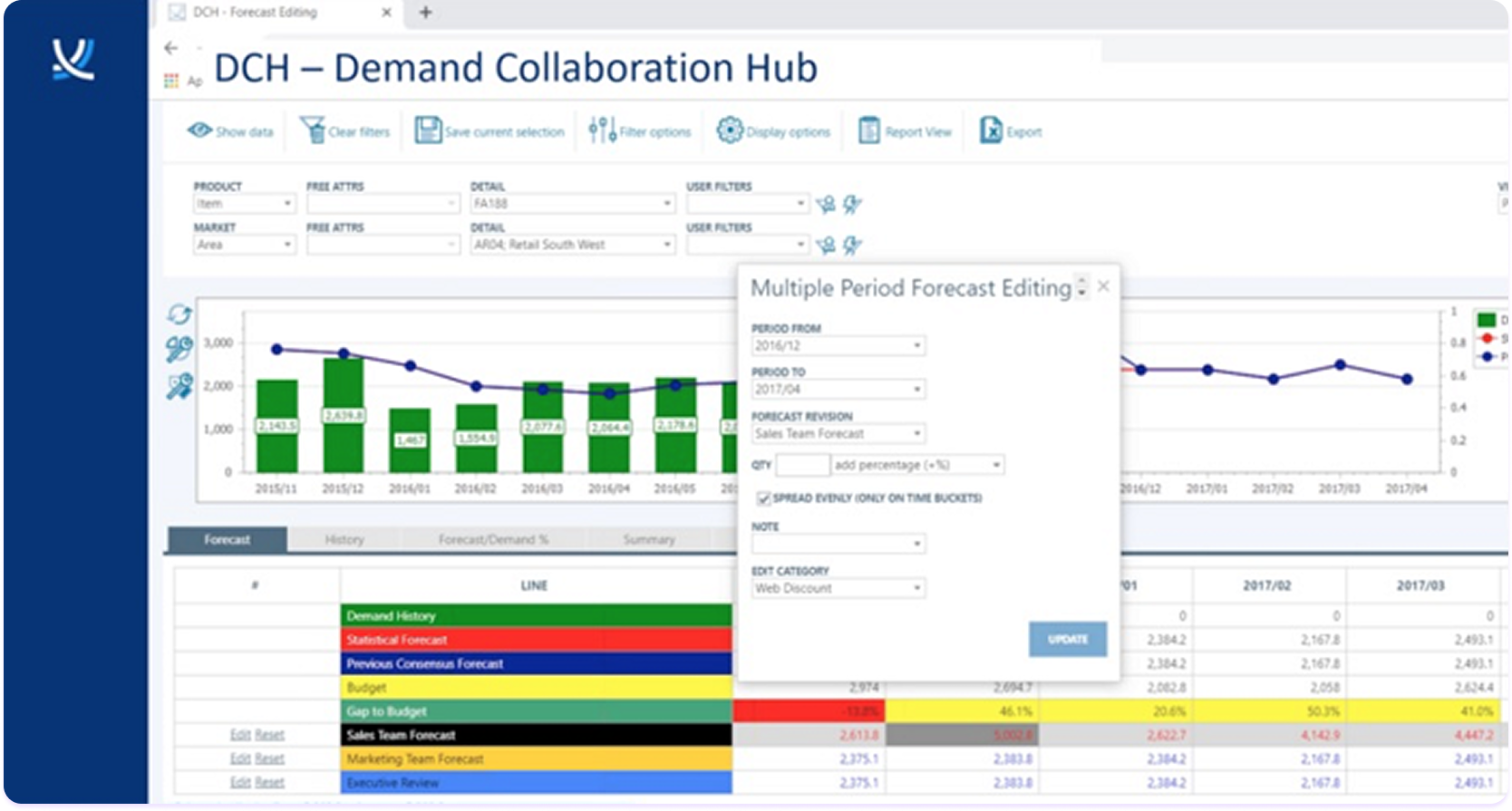
Tools Group offers a S&OP workflow supports the entire process with tasks per role, allowing demand participants to adjust the forecast base with market insights and for the supply side to build a consensus plan. On a single data model, each area can view and execute scenarios that show how promotions, price changes or other business levers impact production and supply capacity.

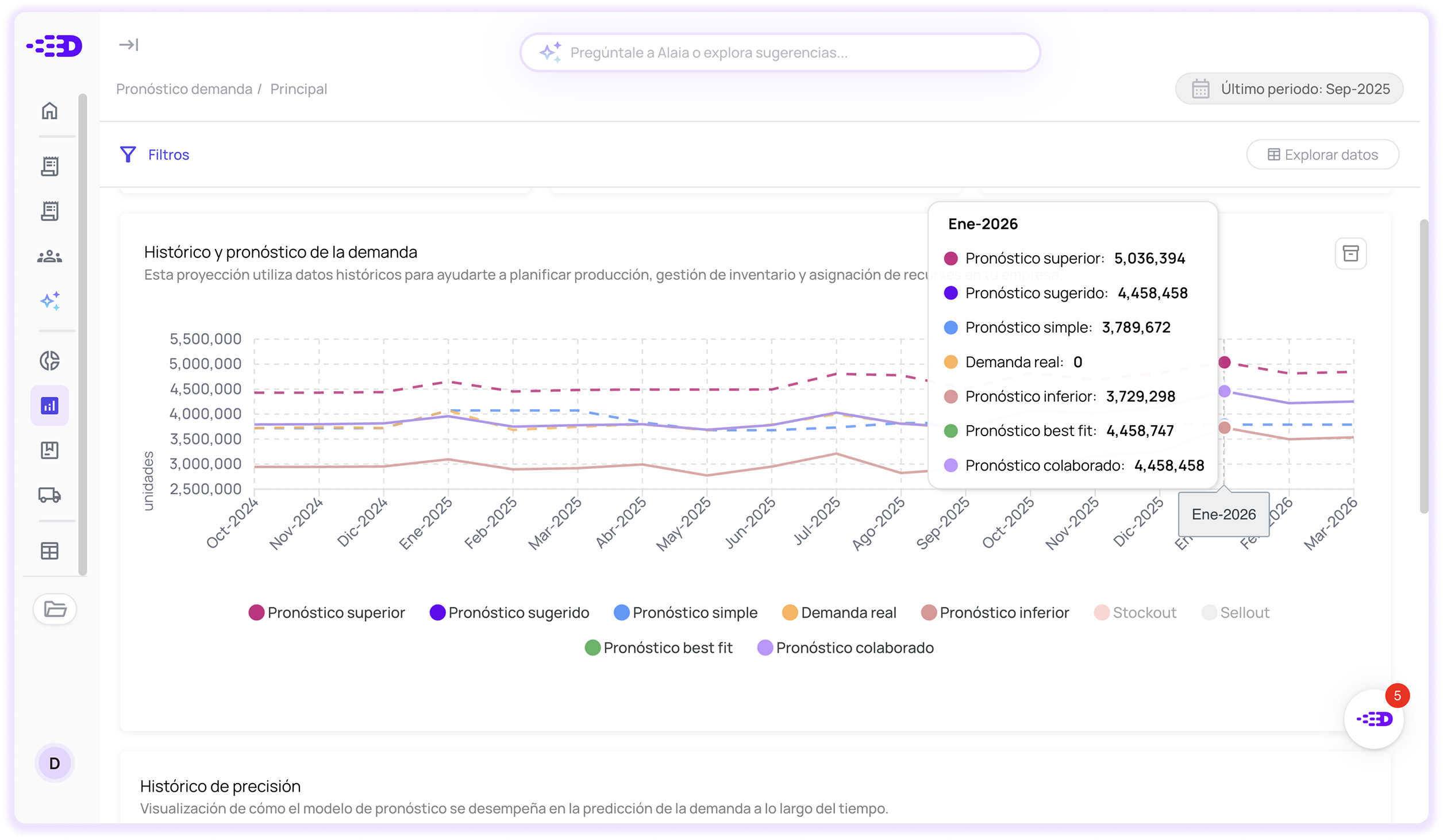
Datup It has a S&OP collaboration panel, where, based on the forecast scenarios, the different teams can collaborate in planning according to their vision and planned activities (promotions, high season, new releases, etc.)

Automated replenishment

Tools Group generates replacement plans that recommend cexact shipping quantities per SKU and store. Calculate minimum and maximum inventory requirements, ensuring optimal stock levels over time. It has the “Rapid Stock Replenishment” tool that quickly calculates transfer proposals between multiple items and retailers, considering current availability, forecasts, time-phased requirements and restrictions.

Datup it also has automated replenishment capabilities. Datup Suggest intelligent inventory reorders based on your demand forecast, lead times, actual inventory and business rules. Can you suggest replenishment by SKU or by location, you even filter by supplier, so you can manage reorders more effectively. It also suggests the ideal amount of inventory between locations, optimizing storage costs and avoiding stock failures.

Pros and Cons of Tools Group

Software Pros Cons
Datup
  • 1. Rapid implementation (less than 5 weeks) allowing immediate results. SPEED
  • 2. Accessible investment with ROI in 3-6 months, not years.
  • 3. Advanced AI for demand and inventory forecasting, with high accuracy (95%+), and integrated AI assistant.
  • 4. Intuitive interface requiring no extensive training or dedicated technical teams.
  • 5. Automatic suggestions for stockouts and overstock, optimal multi-site distribution.
  • 6. Comprehensive platform with fully integrated planning, inventory, purchasing, and distribution modules.
  • 1. Lower brand recognition globally compared to established competitors.
  • 2. Requires digital maturity and a minimum of 2 years of data for maximum AI effectiveness.
  • 3. Not recommended for companies with annual revenue under $10M USD.
Tools Group
  • 1. Robust solution with multi-echelon optimization (MEIO) and advanced probabilistic models.
  • 2. Strong focus on scenario simulation and supply chain digital twin.
  • 3. Ability to handle global and complex supply chains in manufacturing and retail.
  • 4. Customizable SLAs and advanced technical support.
  • 1. Complex implementation that can take several months. COMPLEX
  • 2. Steep learning curve due to the sophistication of probabilistic models.
  • 3. Variable ROI depending on business adaptation and required consulting.
  • 4. Does not natively include production planning or transport/logistics management.

Main differences between Tools Group and Datup

Difference Datup ToolsGroup
Implementation Time Speed Datup: Agile implementation

Datup integrates with your ERP, WMS, and TMS systems in **6 to 8 weeks**, allowing you to start optimizing inventories and achieving results much faster than other market options.

No extra implementation costs
Variable ToolsGroup: Medium-high complexity

Implementation time can take **several months**, depending largely on supply chain network complexity and probabilistic model configuration.

ROI Short Term Datup delivers immediate value

Thanks to its rapid implementation, Datup generates ROI in **3-6 months**.

Companies see inventory reductions of up to 30% within the first few months
Medium Term ToolsGroup: Variable return

ROI is **variable** and depends on how quickly the organization adopts new processes and probabilistic models, as well as the level of consulting required.

Pricing Model Flexible Datup: SaaS with flexible subscription

**Monthly subscription** model accessible from the cloud, without the need for large initial investments.

Ideal for mid-sized companies seeking scalability without compromising the budget
Corporate ToolsGroup: Robust platform

Model focused on **large enterprises** with complex structures. Usually requires a more significant investment due to the sophistication of its Machine Learning models and digital twins.

When to choose Tools Group?

Datup is ideal for: Tools Group is ideal for:
Company Profile:
Mid-sized to large companies seeking to optimize inventories quickly
Retail and consumer goods companies needing accurate forecasting
Manufacturing requiring distribution optimization
Organizations needing short-term ROI (3-6 months)
Teams that value agile implementation and personalized support
Companies with products having expiration dates
Businesses seeking automation with a virtual assistant
Datup Success Stories:
Retail, consumer goods, and manufacturing companies have achieved up to 30% inventory reduction, improved availability, and reduced stockouts.
Company Profile:
Large companies in manufacturing, retail, and global distribution sectors.
Organizations requiring multi-echelon inventory optimization (MEIO).
Companies needing advanced probabilistic models and scenario simulation.
Companies with highly complex supply chains and digital maturity.
Organizations willing to undergo longer, consultative implementation processes.
ToolsGroup Approach:
Ideal for resolving uncertainty in complex supply chains through a probabilistic approach and digital twins for planning.

Switching to Datup is easy

1

Connecting to your system

We identify the most efficient type of integration for your operation (API, Data Warehouse or files) and connect directly to your system or other key sources.

2

Structuring and training

We extract data from your system, structure it according to your operation, and train our AI models to deliver accurate and actionable recommendations.

3

Validation and start-up

We provide you with ready-to-use dashboards, with clear and actionable information. We validate with your team that the recommendations fit the operational reality and fine-tune the last details.

FAQs

What is the main difference between Datup and Tools Group?

They differ primarily in the approach to each software. Tools Group was created primarily for inventory management and optimization, and then integrated other planning functionalities. Datup, on the other hand, was born natively as an AI analytics software for demand planning and inventory management and optimization, focused on advanced models, which aims to improve supply chain decision-making based on data.

Is Datup cheaper than Tools Group?

That's right, Datup has a more accessible payment model than Tools Group. Datup offers scalable plans that allow growing companies to access advanced forecasting and supply chain technology without a large initial investment. In addition, it has unlimited users and a fixed monthly subscription adapted to the needs of your company.

How long does it take to show tangible results since implementation?

When implementing Datup, companies usually see the first tangible results within 4 to 8 weeks thanks to its agile implementation process. Tools Group, due to its higher level of complexity, generally requires a period of 2 to 6 months to complete the implementation.

Does Tools Group connect to other ERPs?

Yes, both Datup and Tools Group have integrations with the main ERPs in the market such as Oracle, Siesa, Odoo, and others. Both platforms have pre-configured APIs and connectors that make it easy to synchronize data.

Does Tools Group have a conversational assistant like Datup?

No, Tools Group does not have a conversational virtual assistant comparable to Alaia from Datup. The Slimstock system focuses on traditional interfaces with control panels, customizable reports and specialized modules that require manual navigation, without a co-pilot assistant.
Supply Chain Analytics
Datup integrates your data and uses deep learning to predict demand (95%+ accuracy), analyze your inventory, and calculate reorder points, prioritizing your purchases based on location and strategic products.
Thank you! Your submission has been received!
Oops! Something went wrong while submitting the form.
Untitled UI logotextLogo
Logo
Logo
© 2025, Datup.