Best tools
8 min of reading

Best Alternatives to o9 Solutions in 2026

Imagen del autor experto

Last update

11/3/2026

By

Laura Ramirez

Business developer

More accurate forecasts and balanced inventories with Artificial Intelligence to align Sales and Operations teams.

Best Alternatives to o9 Solutions in 2026

QUICK SUMMARY

The best alternatives to o9 Solutions are: Datup, Kinaxis, Oracle, Coupa, Anaplan, and Logility. Get to know in detail which one is best suited to your operation.

The alternatives to o9 solutions: short list

  1. Datup: Ideal if o9 seems too complex or expensive to you; it offers complete AI for the supply chain, offers demand forecasting, inventory management and automatic replenishment, with implementation in just 5 weeks in an intuitive interface. Good price-functionality ratio.
  2. SAP IBP: The natural option if your company already runs on SAP; it connects demand, supply and inventory planning directly with S/4HANA and the financial cycle.
  3. Anaplan: If you need total flexibility to model any process from scratch and connect supply, finance, sales and HR in one place.
  4. Oracle SCM Planning: If your ERP is Oracle; integrate governance, compliance and financial planning without friction.
  5. Coupa: It includes logistics functionalities: locations, routes and cost-to-serve with mature digital twins.
  6. Logility: A balanced option with good price-functionality ratio; more accessible and simple than o9, with practical ML for forecasting and multi-location inventory optimization.
  7. Kinaxis: If you operate in an industry with frequent disruptions and you need the entire chain (demand, supply and inventories) to be instantly recalculated in the face of any change.

The supply chain is a fundamental part of the financial and operational management of companies. It's crucial to have the right tools to anticipate disruptions and market movements in real time. Software that addresses every link in the chain makes it possible to make better decisions based on data that links operations with financial objectives.

Over the past 4 years, I have analyzed a large number of supply chain tools for multiple clients with the objective of transforming their operations and staying at the forefront of technology, working closely with complete supply and demand planning teams. o9 Solutions is one of the leading tools in the Anglo-Saxon market, but when you need a tool that adapts to the size of your operation, SKUs, channel and locations, budget, and understands the nature of your business, it's hard to know which one is ideal for your company.

Why trust our software reviews

Since 2022, we have been testing and talking to users of multiple tools for demand planning and supply chain management. I know in detail how difficult and complex large scale operations are and the barriers that exist when choosing new software to optimize operations.

We've invested a lot of time in research to help supply chain professionals make better decisions. To accompany them in their digital transformation, we tested many tools, and we know for sure what can work for them and what can't, based on their daily operations.

Comparison table of alternatives to o9 Solutions

This comparison chart summarizes the details of the main selections of alternative software to o9 Solutions, to help you find the best software for your budget and business needs.
Software Ideal for Key functionality Pricing
D
Datup
Companies seeking powerful AI for supply chain with fast implementation and without o9's complexity. • Agile implementation in ~5 weeks
• Demand forecasting with deep learning (+95% accuracy)
• Automatic replenishment and inventory optimization
Flexible subscription (SaaS), no lock-in clause
S
SAP IBP
Large enterprises already integrated into the SAP ecosystem that want to connect planning with their ERP. • Native SAP S/4HANA integration (bidirectional)
• Multi-echelon inventory optimization
• S&OP connected with direct financial impact
Very high (USD 500k – 3.5M+), 3-year minimum contract
A
Anaplan
Companies that need full flexibility to model financial, commercial, and operational planning. • Hyperblock engine for multidimensional calculations
• Highly flexible no-code modeling (blank canvas)
• Multi-area connected planning (supply, finance, sales, HR)
Scalable by user and capacity (USD 30k – 500k+)
O
Oracle SCM Planning
Organizations already running Oracle ERP/HCM that prioritize corporate governance and compliance. • Native Oracle ERP/HCM integration
• Demand planning with predictive models and external signals
• S&OP with financial integration and GAAP/IFRS compliance
Enterprise (quote-based), 3+ year contract
C
Coupa
Companies that need to fully redesign their logistics network and optimize cost-to-serve with digital twins. • Network design with mature digital twins (LLamasoft)
• Optimization of plant, warehouse, and DC locations
• Sustainability and procurement integration
Enterprise (quote-based), very high TCO
L
Logility
Companies looking to improve their supply chain with a good price-to-functionality ratio and lower complexity. • DemandAI+ with ML for forecasting and promotions management
• Multi-location inventory optimization (ABC/XYZ)
• Controlled, low-risk implementation with less IT dependency
Mid-range (3–5x more affordable than other enterprise alternatives)
K
Kinaxis
Global manufacturers with frequent disruptions that need to recalculate the entire supply chain in real time. • Concurrent planning: one change recalculates the entire chain instantly
• Digital Twins to simulate disruptions and responses
• Control Tower with smart alerts and multi-enterprise visibility
Enterprise (USD 200k – 3M+), 3-year minimum contract

Best Alternatives to o9 Solutions in 2026

Datup

If you are looking to transform your supply chain operation with advanced AI technology, Datup is one of your best options.

Datup is a supply chain analytics software powered by artificial intelligence and deep learning, with which you can have high-precision demand forecasts, portfolio classification by ABC, XYZ and FSN impact, suggestions for intelligent reorders, avoid stock failures and raise your service levels.
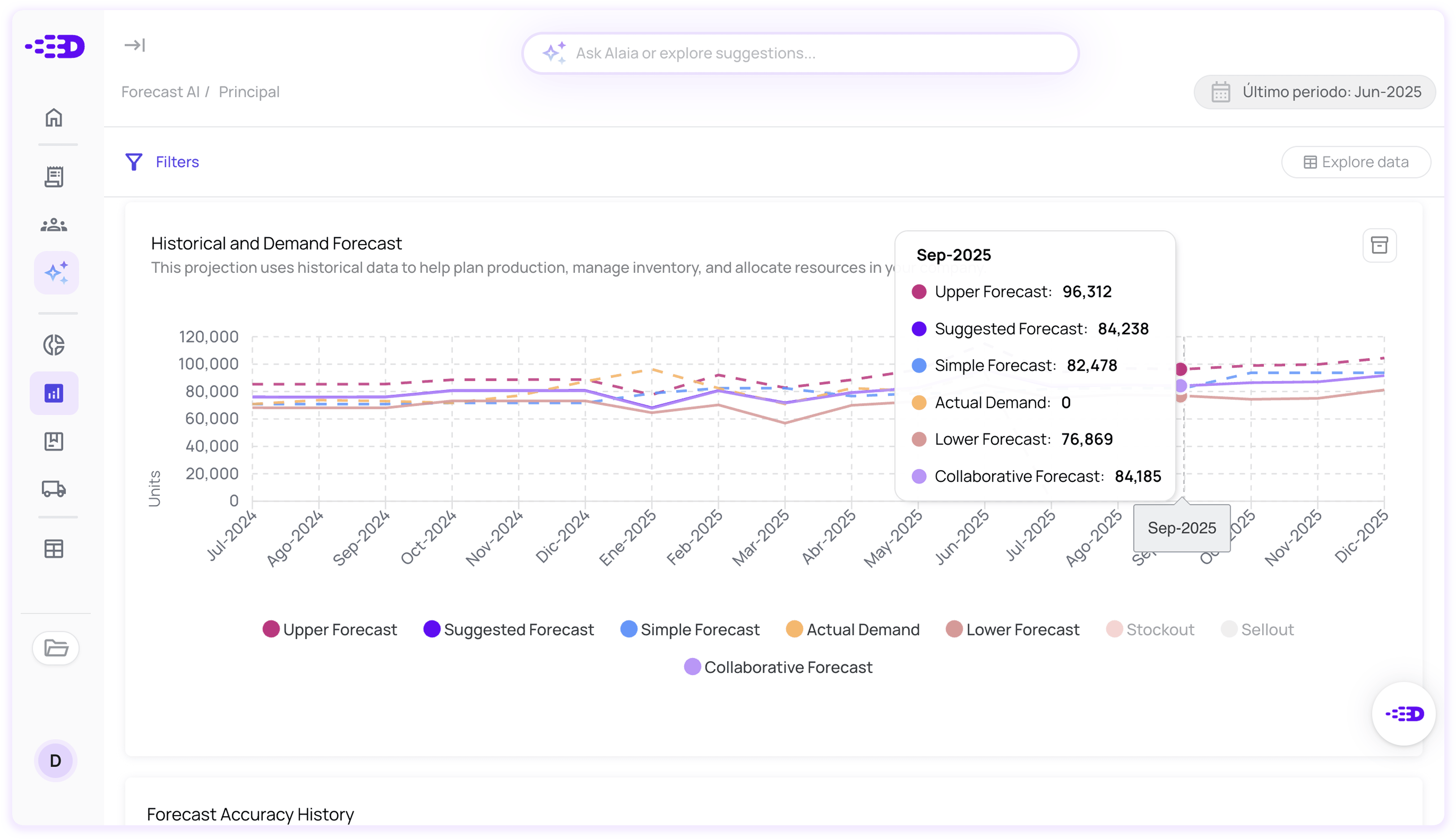
Unlike other tools on the market, Datup is a comprehensive tool for multiple teams (supply, finance, commercial, etc.) where they can work with a single source of truth. In addition, it is one of the most agile implementation tools, connecting securely to your data sources (ERP, CMS, TMS, etc.), in an estimated 5 weeks (in its simplest implementation).

Functionalities

Among the features with the highest return on investment are:

Advantages vs o9 Solutions

Datup is a better option if you are looking for a tool made for the enterprise with greater accessibility and speed of implementation. Among the specific advantages we have:

  • Regarding o9 Solutions (one of the leading supply chain tools in the market) Datup competes directly with its demand planning module, unlike o9 Solutions, Datup understands the peculiarities of operating in unstable environments such as Latin America.
  • Datup has a specific collaboration panel to share with multiple teams and facilitate demand planning.
  • In Datup you have access to AlAia, an assistant specialized in supply chain and trained to answer questions in natural language about your data.

Disadvantages

  • Smaller corporate reach: Datup doesn't cover corporate-level finance, marketing and sales like the o9 Solutions IBP module, which unifies all business planning on a single platform.
  • No advanced MEIO optimization: o9 includes native Multi-Echelon Inventory Optimization (MEIO) with greater depth for very complex distribution networks.

Price

Datup doesn't have standard pricing, you need a quote from the sales team adapted to the needs of your operation. However, there is no permanence clause and the first payment is made until the first results are obtained. Plus, you won't incur extra initial implementation costs, or hire an external consultant.

SAP IBP

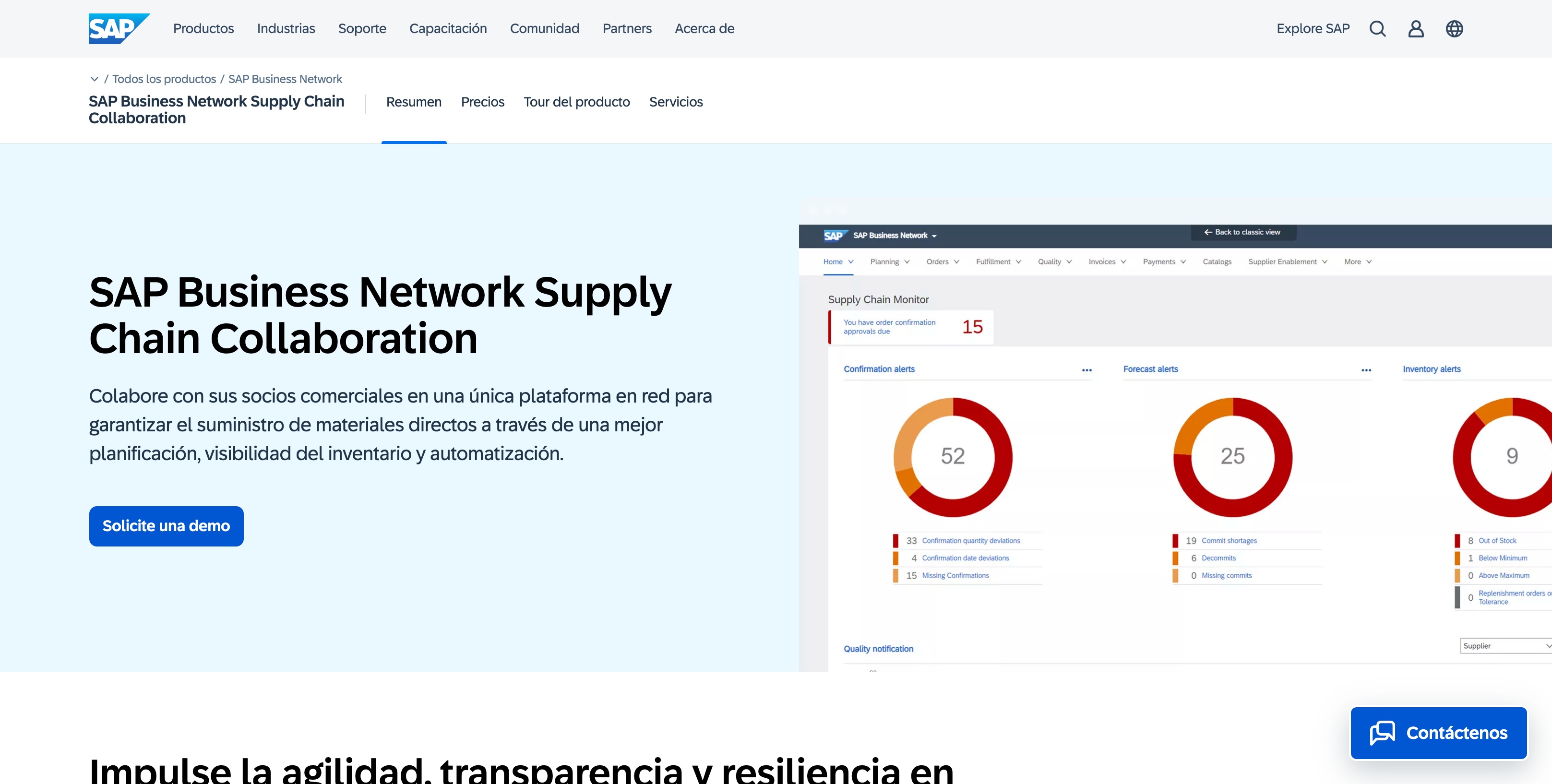
SAP IBP is an enterprise-level planning platform with strong integration into the SAP ecosystem. Its proposal is ideal when the company needs to connect the demand planning stages, with supply and inventory and with the financial cycle using real-time transactional data from S/4HANA.
Functionalities


With SAP IBP, you can see the financial impact of this combination right away. Especially when looking for scalability and working with its hierarchy support. Some of its main features are:

  • Its ML algorithms for forecasting and capturing complex patterns.
  • Your demand sensing process with real-time data integration (POS, transactions).
  • The multi-level forecasts (with aggregate, category, SKU, location, etc.).
  • Your multi-Echelon inventory optimization with probabilistic safety stock.
  • Lead time forecasting with real-time visibility.
  • Your S&OP integrated with scenarios What-if with immediate financial impact.
  • Native integration with SAP Analytics Cloud and multi-level workflows.
  • Direct connectivity to SAP S/4HANA with bidirectional synchronization.

Advantages vs o9 Solutions

SAP IBP is advantageous if you are looking for greater SAP integration with a governance model rather than greater flexibility. It achieves this with:

  • Your native SAP integration (o9 Solutions requires specific integrations)
  • Your integrated financial planning that requires less additional effort.
  • Its potential for multinational scalability (multi-currency, legal entities, GAAP/IFRS compliance).
  • The native Excel experience, which is familiar to planners.
  • A global ecosystem of consultants and availability of templates by industry.

If SAP is already the backbone of your company, SAP IBP is naturally the priority option.

Disadvantages

His Achilles' heel is agility. SAP IBP requires more organizational change, more team training and greater dependence on IT.

  • Its learning curve is steep (SAP terminology and training 3—6 months).
  • It has high costs and hidden costs.
  • Its flexibility is limited to o9 Solutions, which offers very unique processes.
  • Its implementation is long (6—12 months; discovery 2—3 months).
  • Overhead IT is significant (basis, maintenance, downtime planning).

Price

Its costs are those of an enterprise solution. It has typically multi-year contracts, licenses, implementation and additional modules that usually represent a significant portion of the investment.

Minimum contract: 3 years

Anaplan

Anaplan is a planning platform with great flexibility, with which companies can define their model, their rules and their flows; unlike o9 Solutions, where the logics are already predefined and optimized for the supply chain.

Functionalities

Anaplan has a Hyperblock engine that facilitates multidimensional calculations and allows us to build models that connect supply, finance, sales and HR, with workflows, collaboration and access controls. It achieves this thanks to its features:

  • A Hyperblock engine for multidimensional in-memory processing.
  • A no-code model for business users.
  • Connected multi-area planning with automatic data flows.
  • Unlimited scenario modeling, with version management and scenario generation.
  • Collaborative workflow, with approvals, comments, tracking and access control.
  • Predictive analytics via integration with ML engines and anomaly detection.
  • REST APIs, webhooks and integrations with Power BI/Tableau.
  • Cloud-native SaaS with automatic updates.

Advantages vs o9 Solutions

Anaplan is the best alternative when looking suppleness and connected planning beyond the supply chain. Plus, it's an accessible gateway for shorter projects.

  • Extreme flexibility thanks to its blank canvas.
  • End-to-end connected planning in multi-area.
  • Speed of changes.
  • More affordable entry cost for small projects.
  • Data portability through open APIs.

When business changes faster than pre-determined models, Anaplan is a better fit.

Disadvantages

However, flexibility requires greater experience and a team capable of doing the modeling from scratch, delaying ROI. In addition, o9 Solutions better covers several retail-oriented needs, and can work with ultra-large volumes.
Some disadvantages of Anaplan:

  • It is less specialized for supply chains than o9 Solutions, since it has more generic algorithms.
  • It does not have advanced retail capabilities.
  • It requires strong technical and analytical expertise.
  • Basic native reporting that often requires additional BI.
  • Very sensitive performance on ultra-large models.

Price

Anaplan scales by number of users and capacity of use, so it has wide price ranges depending on the size and scope of the model.

Oracle Fusion Cloud SCM Planning

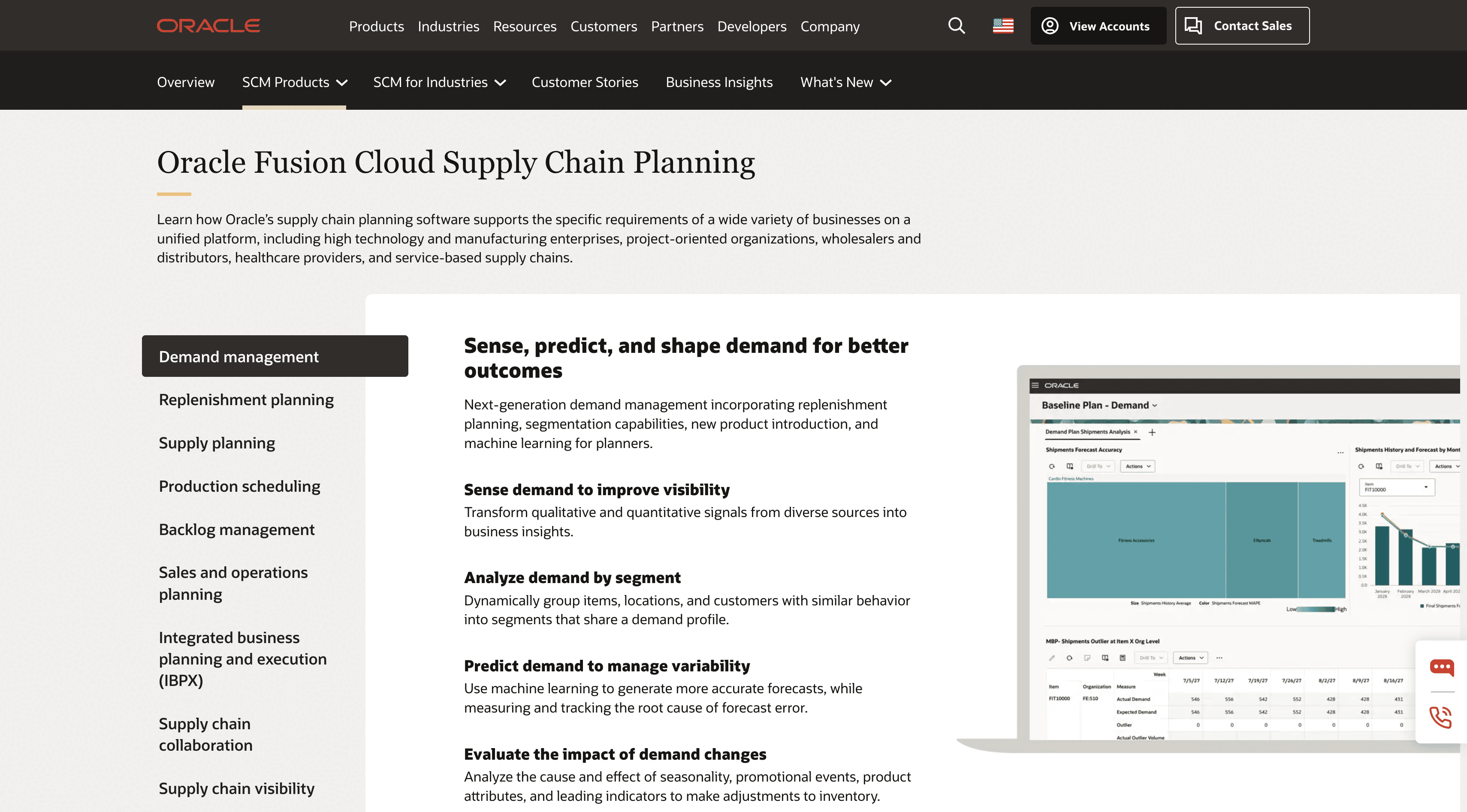
Oracle Fusion Cloud SCM Planning is the most obvious alternative if you are already working with Oracle ERP/HCM. This option has native integration with the transactional and financial core, and a complete platform for demand, supply, inventory and S&OP.
Functionalities

The platform is especially relevant for organizations that seek consistency and control rather than continuous experimentation. It achieves this through its main features:

  • Demand management with predictive models and dynamic adjustment based on external signals.
  • Decomposition of demand by base, trend, seasonality and events.
  • Supply planning with programming and optimization.
  • Inventory management with automated replenishment and multi-location policies.
  • S&OP with financial integration and evolution analysis.
  • Backlog management, with order prioritization and scenario simulation.
  • Visibility with customers and suppliers, VMI and contract manufacturing.
  • Integrated advanced analytics for anomaly detection, cause-effect analysis and recommendations.

This set of capabilities is aimed at organizations that prioritize governance, predictability and financial alignment across the entire supply chain.

Advantages vs o9 Solutions

Oracle is the obvious choice when looking for native Oracle integration and corporate governance.

  • It has native Oracle integration with ERP/HCM.
  • More direct financial integration.
  • Oracle ecosystem with consultants and implementation practices.
  • Pre-built compliance.
  • Enterprise approach for multinationals.

If your company already works with Oracle, Oracle SCP is the priority option.

Disadvantages

On the other hand, Oracle is often less flexible than o9 Solutions, and tends to require more implementation time, more change management, and a high learning curve. In addition:

  • It has high costs.
  • Its implementation is long, from 6 to 12 months.
  • It's less flexible than other alternatives.
  • Its learning curve is complex.
  • Switching costs high if you haven't previously worked with Oracle.

Price

Oracle SCP manages expensive in the enterprise ranges with licensing per user and capacity and multi-year contracts. Contract: 3+ years typical. The prices are not public.

Coupa

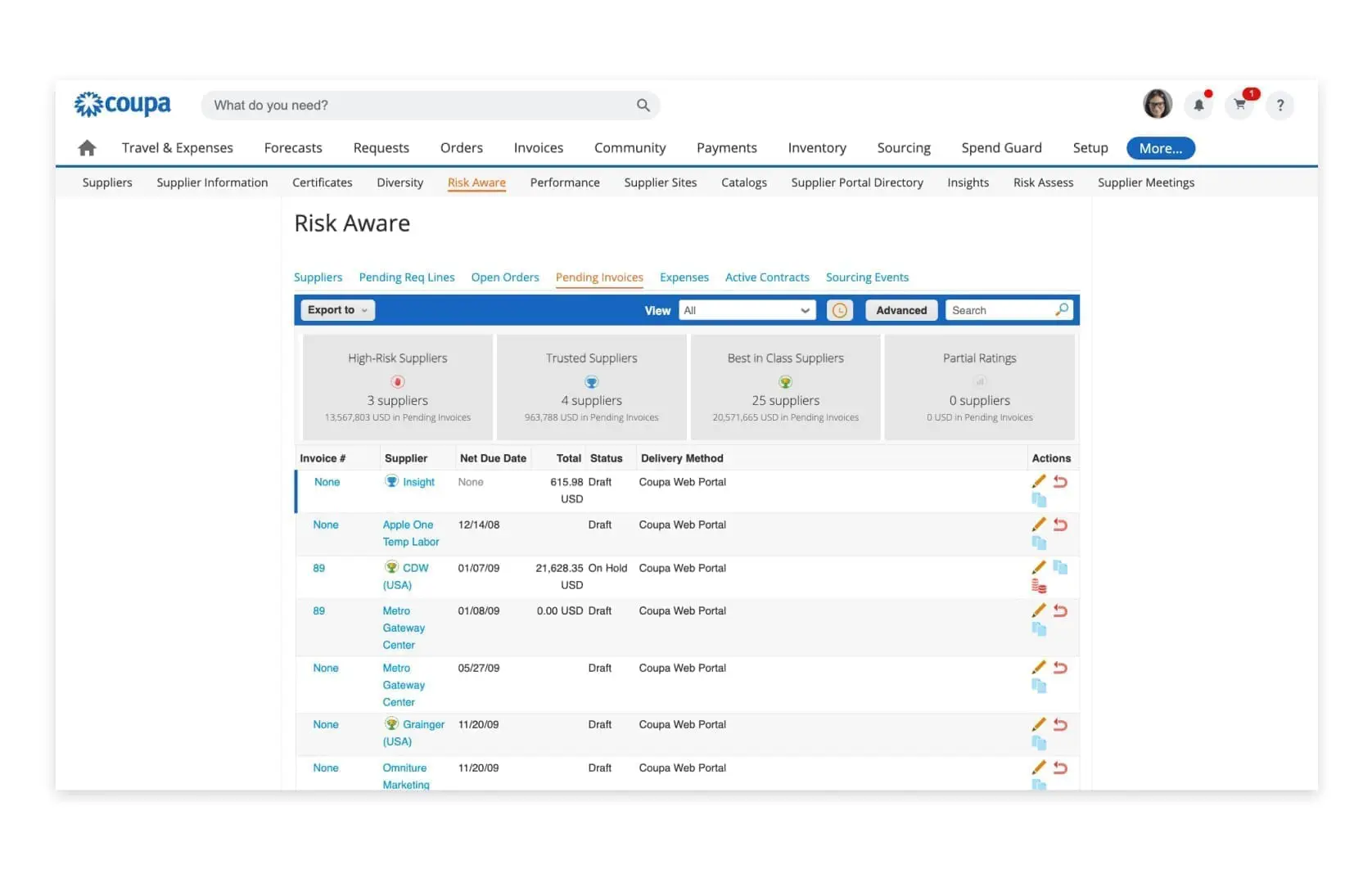
Coupa is differentiated by its “network-centric” vision, which seeks to model the network, simulate structural changes and optimize cost-to-serve with great accuracy.

Functionalities

Coupa makes it possible to evaluate some decisions in advance, such as the location of plants, warehouses and DCs, to logistically redesign processes and to identify the impact on costs and resilience. In addition, it incorporates sustainability and makes it possible to connect network decisions with contracts. It does this thanks to its features:

  • With network design & optimization with digital twins.
  • With scenario modeling for plant locations, warehouses and DCs.
  • With the optimization of the cost-to-serve and the logistics redesign.
  • With demand planning with ML and external demand sensing.
  • With supply planning and production scheduling.
  • With the optimization of inventories.
  • With sustainability and risk reduction.
  • With integration with Coupa procurement and data tools.

Advantages vs o9 Solutions

Coupa is superior when it comes to solving the network optimization and to make structural decisions about cost and sustainability. Thanks to his work with LlamaSoft, he has deep specialization in network modeling.

  • Their digital twins are more mature, thanks to their experience with Llamasoft.
  • Its network optimization is superior for locations.
  • Their focus is on cost-to-serve by channel or region.
  • It offers integrated sustainability.

To redesign the network to lower costs and improve resilience, Coupa is superior to o9 Solutions.

Disadvantages

However, that focus can also become a constraint on solving demand problems with inventory and daily operation.

  • Their costs are very high, and the complexity of the networks increases the TCO.
  • Its implementation is complex; the modeling phase is particularly lengthy.
  • The steep learning curve.
  • Their network-centric approach may not be necessary if tactical replanning is sought.
  • Post-purchase issues with support and service are reported.

Price

Its pricing model is enterprise, and it's not public. The total cost is sensitive to your scope.

Logility

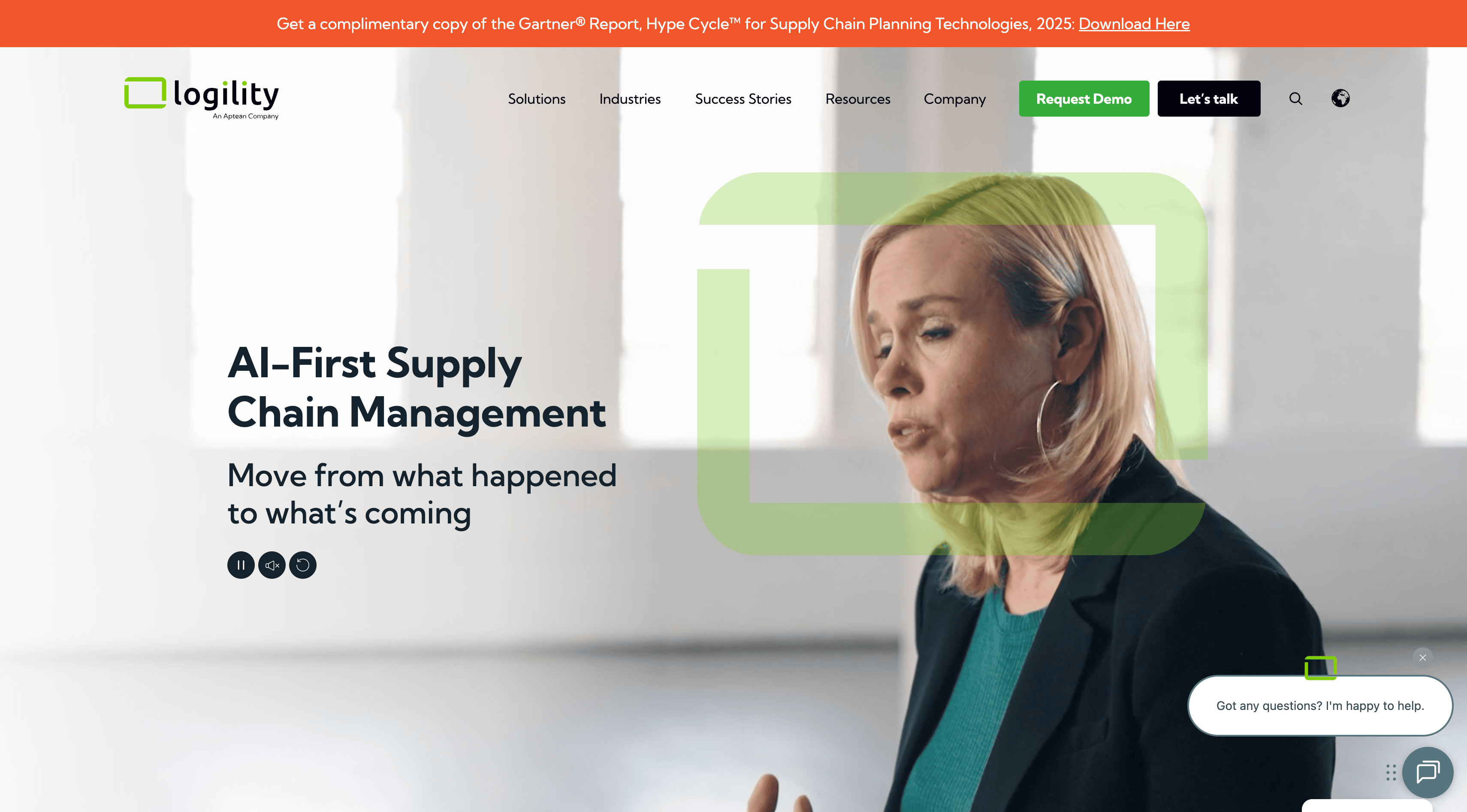
Logility is one of the most accessible alternatives for supply chain planning, since it has a great relationship between price and functionality. Compared to o9 Solutions, it's a solid suite with practical ML, strong scenario planning, and accessible digital twins. All of this makes it a particularly attractive option for organizations that want value without having to resort to heavier and more expensive enterprise platforms.
Functionalities

Functionalities

This platform is designed to adapt to different operating models, either from a technological or organizational point of view. This allows companies to choose between cloud, on-premise or hosted deployments, depending on their internal needs. For this purpose, it has the following features:

  • DemandAI+, with machine learning applied to forecasting, promotion management and product launches.
  • Inventory optimization, security stock, ABC segmentation and multi-location planning.
  • Supply optimization.
  • S&OP process with scenario planning and alignment between revenue, profitability and service levels.
  • Deployment optimization.
  • Data management and fast integrations.

Logility is a balanced solution for organizations looking to improve their supply chain planning without assuming the complexity or cost of more sophisticated platforms.

Advantages vs o9 Solutions

Its main difference from other alternatives is in economic terms. Logility is 3 to 5 times more accessible than other alternatives and requires less intervention to work properly. In addition, it has a user-friendly interface that reduces friction during adoption.

  • It's much more accessible.
  • Its implementation is more controllable with less customization required.
  • Its interface is friendly and simple.
  • Its digital twins are accessible for scenario planning.
  • Less need for IT.

Logility is an option to consider if you are looking to optimize the supply chain efficiently.

Disadvantages

Logility has limits to its scalability and its ecosystem and visibility in the market is lower.

  • Its AI is less sophisticated than that of o9 Solutions.
  • Your IBP is less integrated.
  • Its scalability is limited.
  • It is less recognized in the industry.
  • Its partner ecosystem is smaller.

Price

Logility has a quote-based and modular pricing model, with clear ranges by size.

Kinaxis

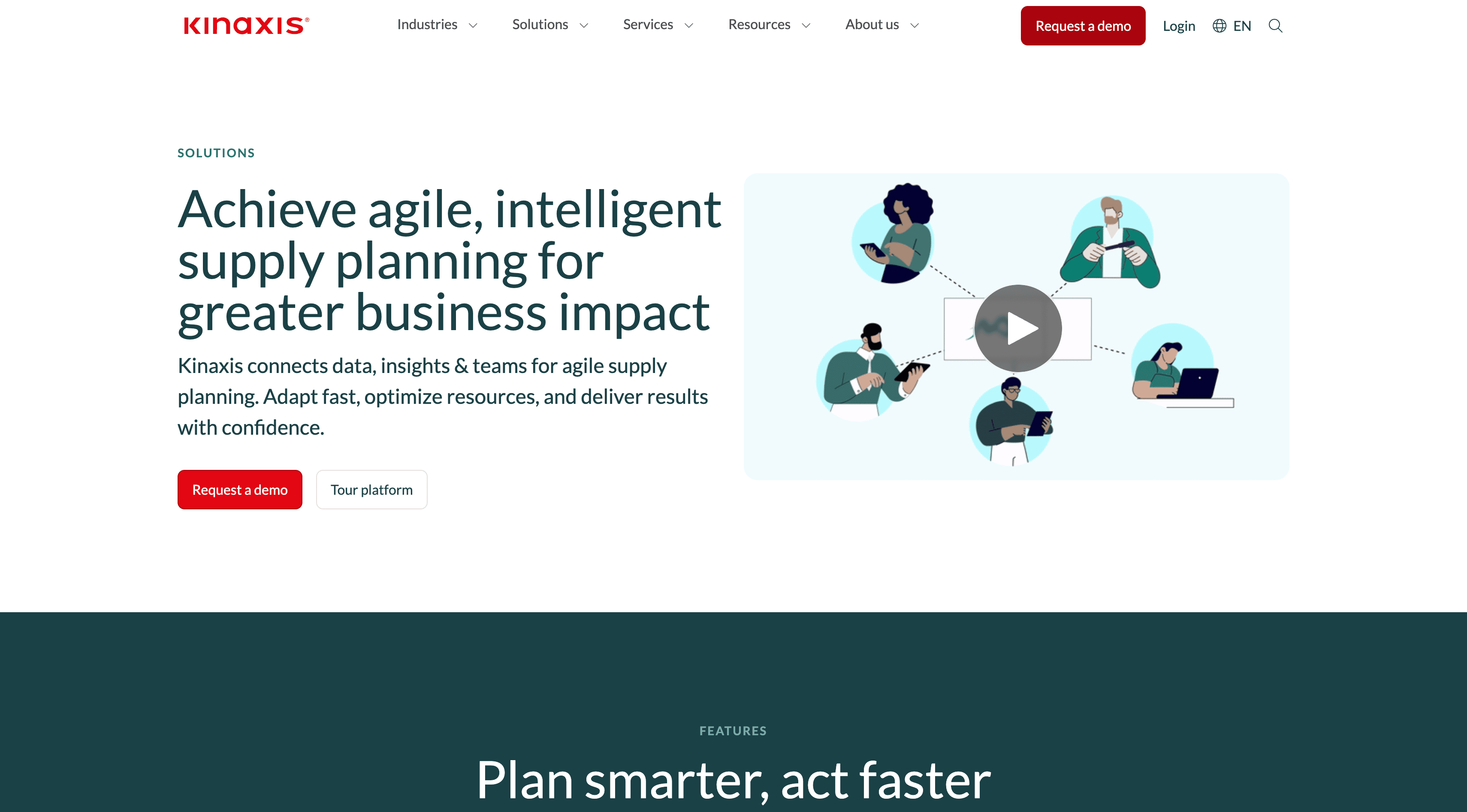
Kinaxis has a concurrent planning engine that, in the face of a change, all plans in demand, supply and inventory are recalculated and synchronized in real time.

This capability is critical for companies that may have high costs if they delay their decisions, or when the business faces industries with frequent disruptions and multiple actors involved.
Functionalities

Functionalities

Its objective is to facilitate quick, agile and informed decision-making. And it makes this possible because the team can see “live” scenarios, compare them and decide with context. Some of the features it incorporates are:

  • The Concurrent Planning Engine with instant recalculation and without batch processing.
  • Automatic synchronization between nodes and the propagation of constraints in real time.
  • Data Fabric with internal/external data unification with open APIs.
  • Scenario modeling is unlimited, allowing for a side-by-side comparison and reviewing the financial impact in real time.
  • Digital twins for testing disruptions and responses.
  • Planning.AI (heuristics + ML), anomaly detection and integrated demand sensing.
  • Generative AI interfaces for queries and dashboards.
  • A Control Tower with intelligent alerts and drill-down.
  • Multi-company visibility (to see suppliers, contract manufacturing, shared forecasts)

Advantages vs o9 Solutions

Kinaxis is a better option when the core issue is speed with synchronization. o9 Solutions is strong, but with Kinaxis “everything is updated at once” and “scenarios don't wait”.

  • Its simulation speed is higher.
  • It has real concurrent planning.
  • Create scenarios without technical limits.
  • It offers more mature multi-company visibility.
  • Its Control tower and exceptions have contextual alerting.

In short, if your industry is experiencing constant changes and requires quick reactions, Kinaxis is the most natural option.

Disadvantages

Despite its advantages, the cost and complexity can be high, and its reliance on memory brings infrastructure considerations to consider. In addition, for companies focused on retail, the lack of price optimization may require the use of complementary tools.

  • Its infrastructure costs are high due to RAM requirements (USD 200K—500K per year).
  • The learning curve is steep (2—3 months).
  • It has a high price and no option of “lite” versions.
  • The implementation can last 6 to 9 months and requires prior critical data cleaning.
  • Lack of price optimization, so it may require additional tools.

Price

Kinaxis is an enterprise option: it has annual licensing depending on the capacity of the uses and modules chosen and mandatory commercial negotiation. Its costs are not public.

Minimum contract: 3 years

Do you want to see Datup in action within your operation?
Clarify your doubts and get to know Datup in a personalized demo.

FAQs

How to choose the best alternative to o9 Solutions?

First you have to identify What problem is being sought to solve. o9 Solutions is a broad and powerful platform, but it's not always the right one.

The decision can be ordered based on a few key criteria:

  • Existing technology stack: If the company already operates with SAP S/4HANA or Oracle ERP, native options reduce the risk and complexity of integration.
  • Supply chain complexity and volatility: dynamic or multi-company operations need an approach with concurrent planning.
  • Main functional approach: A comprehensive IBP, network optimization, tactical planning or multi-company visibility can be prioritized.
  • Budget and timeline: the decision must be adapted to the possibilities and deadlines of each company.

For example; Kinaxis for its simulation speed and real-time synchronization; Anaplan offers flexibility and connected planning between areas; Coupa is strong in network redesign and cost optimization; Logility is a balanced option.

The right choice depends on which dimension generates the most value for each company.

What is the most affordable alternative to o9 Solutions?

In terms of entry costs, Datup is the option with the lowest starting ranges.

However, the final cost depends on multiple variables:

  • Such as the actual functional scope of the implementation.
  • The volume of data and granularity required.
  • The level of customization and integration.

In this regard, the analysis should focus on the total cost of ownership, since a cheaper option at the start may become insufficient if the complexity of the business increases.

How is the migration process from o9 Solutions?

The migration from o9 Solutions is a structured process that combines technical work, process redesign and change management. It's not just about moving data, but about adapting the way the organization plans and makes decisions.

Overall, the effort is concentrated on three fronts:

  • Data: a cleaning, standardization and a single source of reliable information must be defined.
  • Processes: it is necessary to redesign the planning cycles, levels of decision and governance of the S&OP or IBP.
  • Adoption: involves training users, adjusting roles and accompanying organizational change.

Complexity increases when there is deep integrations with ERP or when it involves a planning paradigm shift.
Generally, there is a phase of coexistence between o9 Solutions and the new solution to validate the results and reduce risks before the definitive change.

Supply Chain Analytics
Datup integrates your data and uses deep learning to predict demand (95%+ accuracy), analyze your inventory, and calculate reorder points, prioritizing your purchases based on location and strategic products.
Thank you! Your submission has been received!
Oops! Something went wrong while submitting the form.
Untitled UI logotextLogo
Logo
Logo
Privacy PolicyAbout us
© 2019-2026, Datup.